Product Description
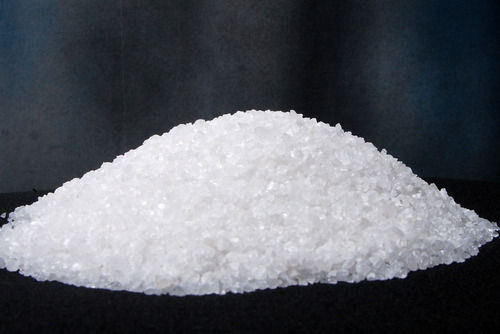
With the support of our adroit professionals, we are actively involved in offering highly effective EDTA Calcium Disodium. Our offered chemical is sequestering agent and is widely used in agriculture, pharmaceutical, detergent, cosmetic, photography and other allied industries for plant growth, water treatment, food and beverages, cosmetics, laboratory reagent and many more. This chemical is processed in the most hygienic environment under the supervision of our professionals. The offered product available in different packaging options as per clients requirements at reasonable prices.
Calcium Disodium EDTA is used in Mayonaisse. It prevents bad taste and odor of decomposing oils or fats in sauces, salad dressings, sandwich spreads and mayonnaise. Cucumbers, pickled cabbage and many other foods contain EDTA Calcium disodium.
Features:
- Purity
- Accurate composition
- Precise pH value
- Highly effective
Specifications:
- Calcium Disodium EDTA is a derivative of Ethylenediamine Tetraacetic Acid.
- Ethylenediamine Tetraacetic Acid is a Sequestering / Chelating Agent. EDTA is a synthetic amino acid. It is widely known as EDTA. It is a white powder. EDTA Acid is insoluble in water. It is widely used to dissolve Metallic Impurities.
- EDTA is widely recognized as effective Sequestering Agent. EDTA grabs metallic cation such as Lead or Calcium from the process and forms a stable compound that is then excreted from the system. The stability of this bond is vital to get the success in removing the inorganic impurities out of the system. If the bond is weak, other chemicals can break this bond to form their own compounds.
Synthesis / Manufacturing Process of EDTA
The compound was first prepared in 1935 by Ferdinand Munz, who prepared the compound from Ethylenediamine (EDA) and Monochloroacetic acid. Today, EDTA is synthesized on an industrial scale from Ethylenediamine (EDA), Formaldehyde, and Sodium cyanide (NaCN). The sodium salt of EDTA forms first in both processes and then can be converted to the acid form.
Calcium Disodium EDTA Properties:
- Product Code : E008
- Product Category : Ethylene Diamine Tetra Acetic Acid Derivatives
- CAS No. : 62-33-9 (Anhydrous); 6381-92-6 (Dihydrate)
- HSN No. : 29173990
- Synonyms : Etylenediaminetetraacetic Acid Calcium Disodium N,N-1,2-ethanediylbis(N-(carboxymethyl)glycine) edetic acid Calcium Disodium Salt, Calcium Disodium Edetate
- Molecular Formula : C10H12O8N2Ca.Na2.2H2O
- Molecular Weight : 372.2
- Appearance : White Crystalline Powder
- Solubility : Soluble In Water, Clear Solution
- Assay : 99.0% Min
- pH : 6.0 - 8.5
- Heavy Metals : 0.002% Max
Uses / Application of Calcium Disodium EDTA
Calcium Disodium EDTA is a Sequestering Agent, which is used in various Industries such as Pharmaceutical, Photography, Textile, Boiler Turbine scale removal, Agriculture as a Micronutrient for Plant Growth, Water Treatment, Laboratory Reagent, Food & Beverages, Cosmetics, Soaps and Detergents, etc. It is used for removing unwanted inorganic impurities present in the system, which helps in getting superior performance and cost saving.
Applications: IN MAYYONISE AS PRESERVATIVE
Versatile Applications Across IndustriesEDTA Calcium Disodium delivers exceptional sequestering and chelating performance, proving invaluable in sectors such as pharmaceuticals, textiles, agriculture, photography, water treatment, laboratory analysis, food & beverages, and cosmetics. Its ability to bind and remove metal ions makes it crucial for eliminating inorganic contaminants, boosting operational efficiency, and protecting sensitive processes throughout these diverse industries.
Superior Purity for Reliable ResultsWith a purity of up to 99%, EDTA Calcium Disodium ensures consistent, reliable results in both industrial and laboratory settings. Its high grade and solubility in water facilitate easy integration into formulas and systems, allowing for precise removal of metal impurities and optimal system performance.
FAQs of EDTA Calcium Disodium:
Q: How is EDTA Calcium Disodium used as a sequestering agent in different industries?
A: EDTA Calcium Disodium works by binding metal ions and unwanted impurities, effectively removing them from solutions. This action is essential in industries like pharmaceuticals, water treatment, textiles, and agriculture, where it helps prevent scale formation, improve product quality, and protect equipment from damage caused by metal contaminants.
Q: What benefits does EDTA Calcium Disodium provide when used in water treatment processes?
A: In water treatment, EDTA Calcium Disodium helps eliminate excess calcium and other inorganic ions, reducing scale buildup in boilers and turbines. This ensures efficient operation, prolongs equipment life, and saves costs related to maintenance and repairs.
Q: When should EDTA Calcium Disodium be applied in agricultural settings?
A: EDTA Calcium Disodium is used as a micronutrient for plant growth, typically incorporated into fertilizers or soil conditioners. It should be applied when plants require additional calcium or during periods of micronutrient deficiency to enhance absorption and support healthy development.
Q: Where can EDTA Calcium Disodium be sourced and in what forms is it available?
A: It can be sourced from manufacturers, suppliers, and exporters in India and is commonly provided as a white powder in industrial grade packaging. Its solubility in water allows for easy application across various industries.
Q: What is the process for using EDTA Calcium Disodium to remove impurities in laboratory reagents?
A: In laboratory settings, EDTA Calcium Disodium is added to reagents to bind and eliminate trace metal ions, ensuring reagent purity. The clear solution formed upon dissolving aids in accurate chemical analysis and reliable experimental outcomes.
Q: Can EDTA Calcium Disodium be incorporated into food and cosmetic products?
A: Yes, EDTA Calcium Disodium is used in food and beverage processing as well as cosmetic formulations to stabilize products, prevent discoloration, and preserve quality by sequestering metal ions that could otherwise cause spoilage or degradation.
 Talk To Expert : 08045801283








 English
 Spanish
 French
 German
 Italian
 Chinese (Simplified)
 Japanese
 Korean
 Arabic
 Portuguese
 Send Inquiry