Product Description
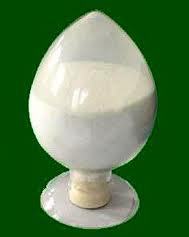
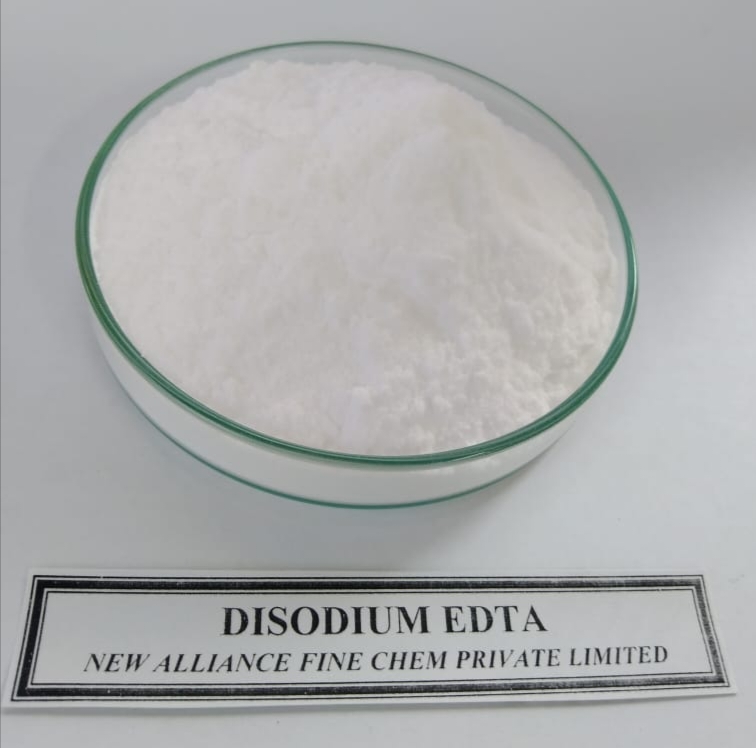
With sincerity and hard work of our chemical engineers, we have carved a distinct niche for ourselves by providing optimum quality Disodium Edta. Recognized as effective sequestering agent, this acid grabs metallic cation such as calcium or lead from the process and forms a stable compound. In addition to this, our offered Disodium Edta is carefully formulated by our team of dexterous chemical engineers with the help of latest techniques.
EDTA in food products bound to iron and is used for fortifying grain-based products, like cereal bars and breakfast cereals. It is also helpful in preserving food and promoting flavor, color and texture of food.
Application areas:
- Micro-nutrient for Plant Growth
- Water Treatment
- Laboratory Reagent
- Food & Beverages
- Cosmetics
- Soaps & Detergents
Other Details:
Disodium EDTA is a derivative of Ethylenediamine Tetraacetic Acid.
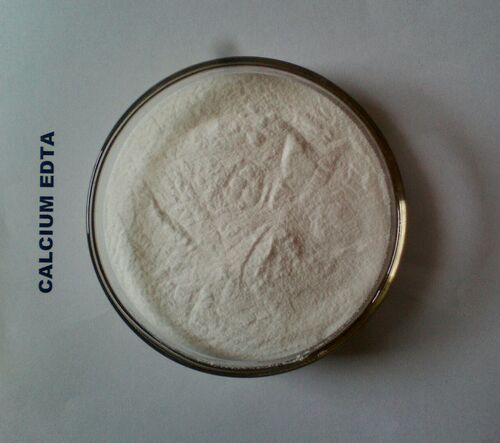
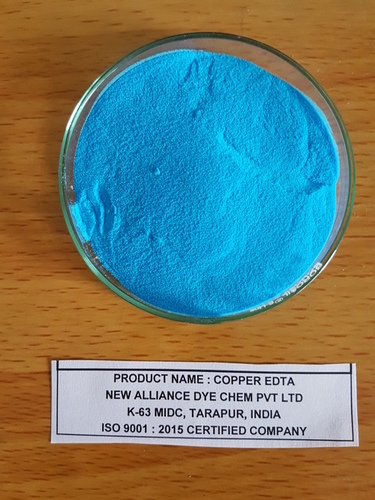
Ethylenediamine Tetraacetic Acid is a Sequestering / Chelating Agent. EDTA is a synthetic amino acid. It is widely known as EDTA. It is a white powder. EDTA Acid is insoluble in water. It is also named as Ethylenediamine Tetraacetate. It is widely used to dissolve Metallic Impurities. There are various Salts / Derivatives of EDTA.
The stability of this bond is vital to get the success in removing the inorganic impurities out of the system. If the bond is weak, other chemicals can break this bond to form their own compounds.
Synthesis / Application of EDTA
The compound was first prepared in 1935 by Ferdinand Munz, who prepared the compound from Ethylenediamine (EDA) and Monochloroacetic acid.Today, EDTA is synthesized on an industrial scale from Ethylenediamine (EDA), Formaldehyde, and Sodium cyanide (NaCN). The sodium salt of EDTA forms first in both processes and then can be converted to the acid form.
Specifications of Disodium EDTA
- Product Name : Disodium EDTA.
- Product Code : E002.
- Product Category : Ethylene Diamine Tetra Acetic Acid Derivatives.
- CAS No. : 139-33-3 (Anhydrous); 6381-92-6 (Dihydrate).
- HSN No. : 29173990.
- Synonyms : Ethylenediaminetetraacetic Acid Disodium Salt, N,N-1,2-ethanediylbis(N-(carboxymethyl)glycine) edetic acid Disodium Salt, Disodium Edetate, Metaclaw, Trilon B, Versene 220, Dissolvine, Titriplex, etc.
- Molecular Formula : C10H14O8N2Na2.2H2O.
- Molecular Weight : 372.2.
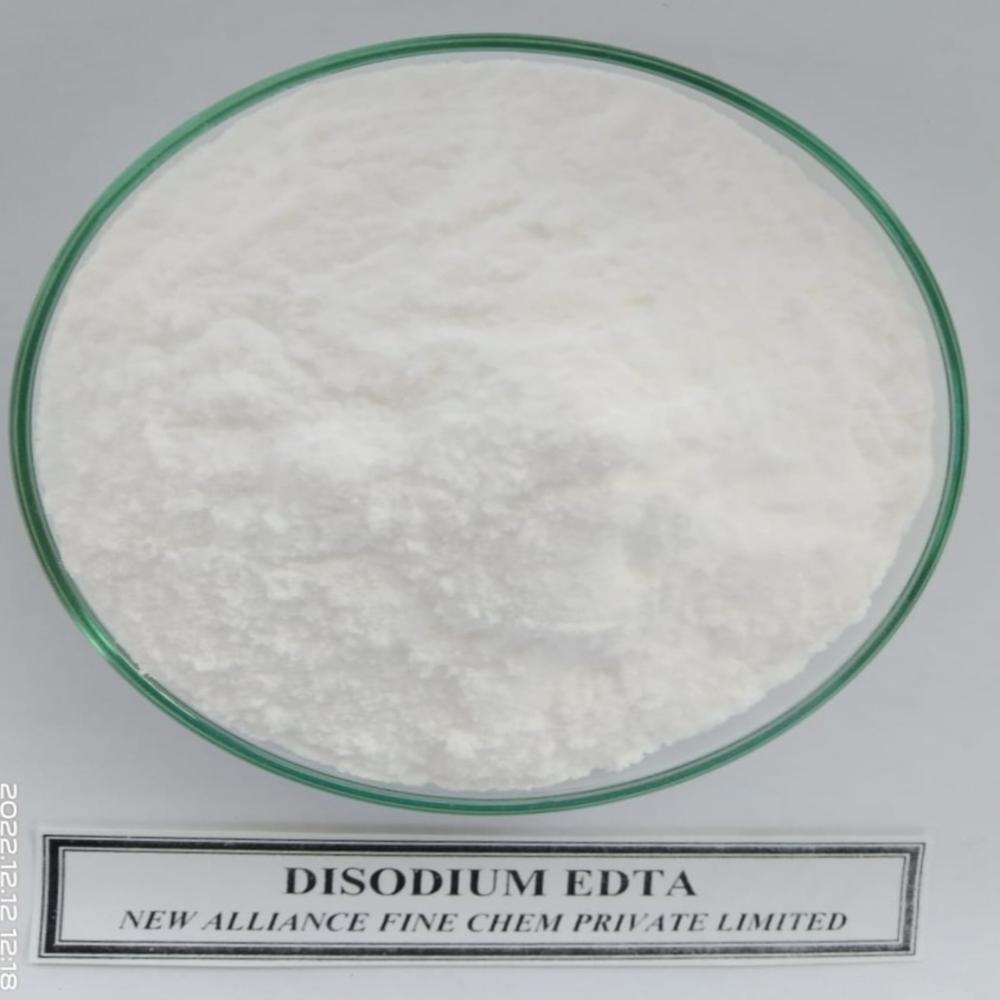
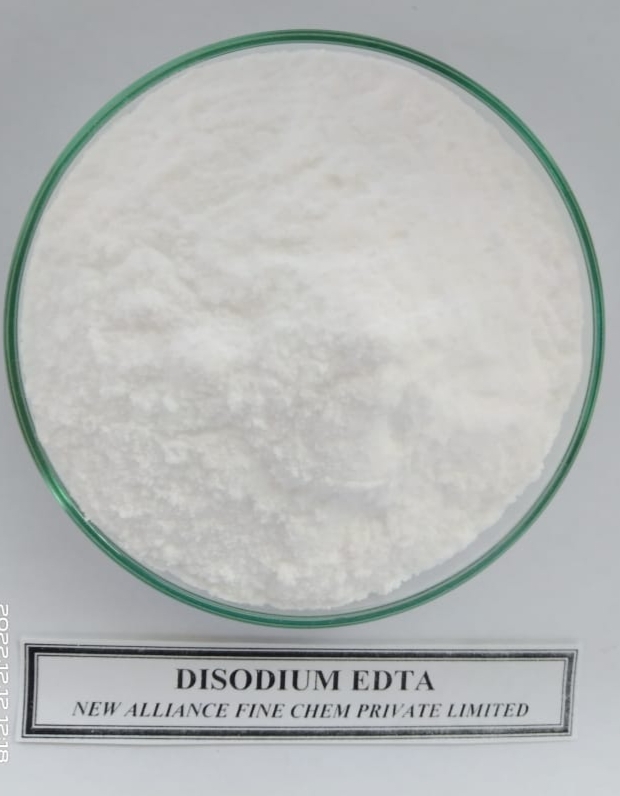
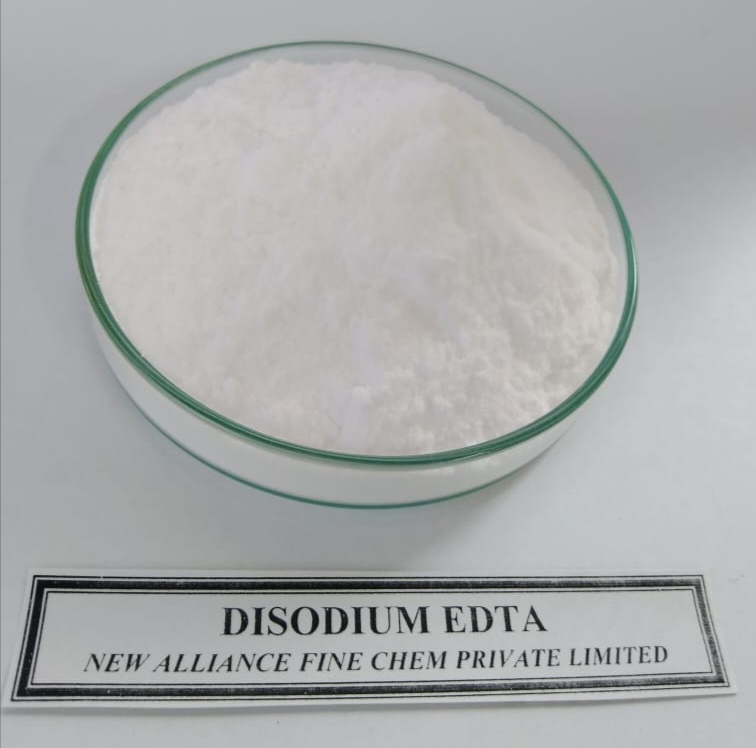
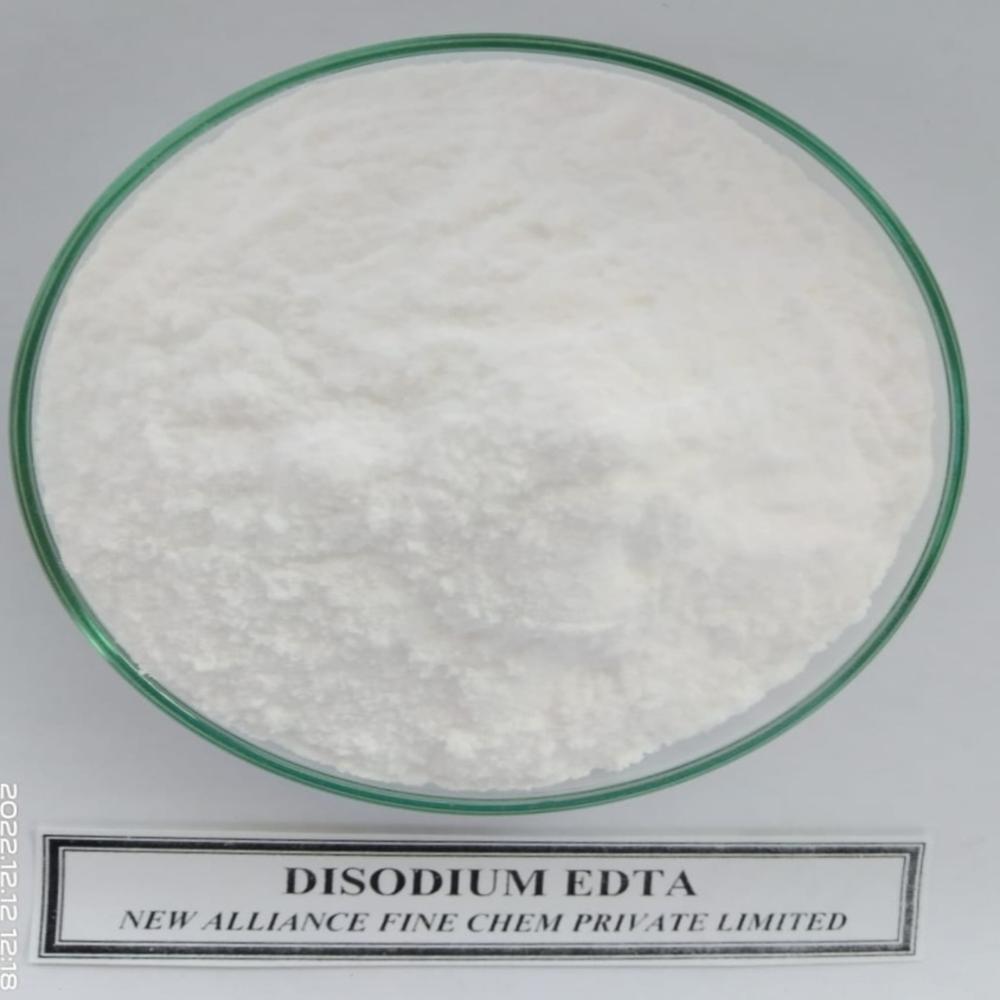
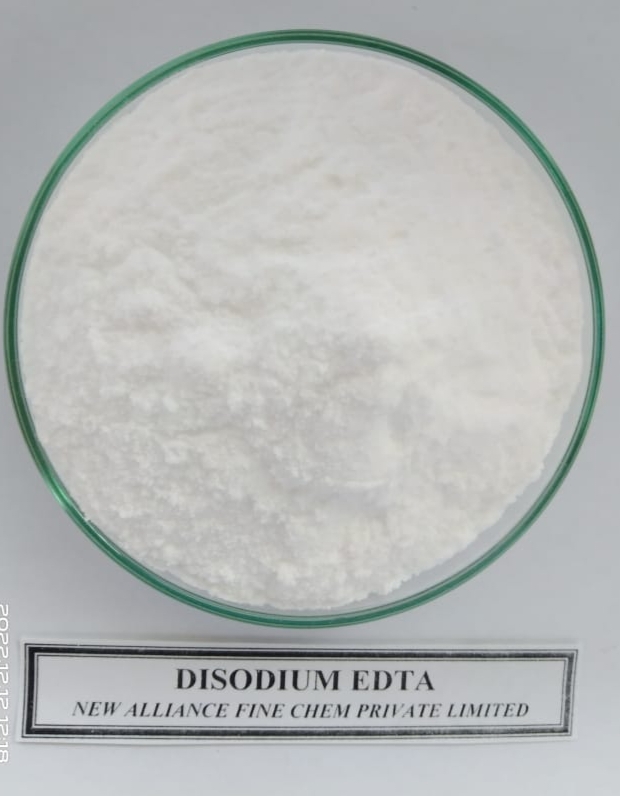
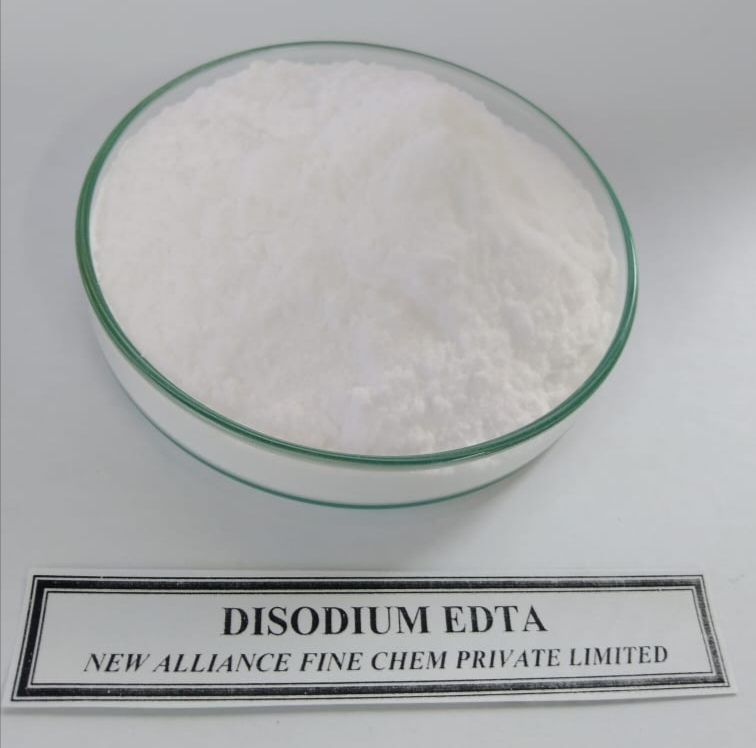
- Appearance : White Crystalline Powder.
- Solubility : Soluble In Water, Clear Solution.
- Assay : 99.0% Min.
- pH : 4.0 - 6.0.
- Chelation Value as mg. of CaCO3 : 270.0.
- Packing : 25 Kg. HDPE Bags / Drums.
Uses / Application of Disodium EDTA
Disodium EDTA is a Sequestering Agent, which is used in various Industries such as Preservative, Pharmaceutical, Photography, Textile, Boiler Turbine scale removal, Agriculture. It is used for removing unwanted inorganic impurities present in the system, which helps in getting superior performance & cost saving.
What is Disodium EDTA?Disodium EDTA is the disodium salt of ethylenediaminetetraacetic acid, appearing as a white powder with high purity (9899%). It excels as a sequestering agent, binding with metal ions to improve processes and system efficiency, especially where removal of inorganic contaminants is essential.
Applications Across IndustriesWith its strong chelating abilities, Disodium EDTA is employed in preservation (), pharmaceuticals, textile processing, water treatment, photography, and agriculture. It facilitates scale removal in boilers and turbines, enhances shelf-life in food and cosmetics, and boosts agricultural yield by minimizing heavy metal toxicity.
Why Choose Our Disodium EDTA?Produced and exported from India, our Disodium EDTA meets strict quality standards and is available in technical grade for diverse industry needs. Its consistent purity and effectiveness translate into reliable system performance, operational savings, and compliance with global regulatory norms.
FAQs of Disodium EDTA:
Q: How does Disodium EDTA function as a sequestering agent?
A: Disodium EDTA works by binding to unwanted inorganic metal ions, such as calcium and magnesium, forming stable complexes. This prevents these metals from interfering with processes, making it highly valuable for water softening, scale removal, and improving product formulations.
Q: What processes or industries can benefit from using Disodium EDTA?
A: A broad range of industries benefit from Disodium EDTA, including pharmaceuticals, food preservation, textiles, boiler and turbine maintenance, agriculture, and photography. Its role as a chelating agent ensures efficient removal of impurities, extends equipment life, and upholds the quality of products.
Q: When is Disodium EDTA typically used during industrial processes?
A: Disodium EDTA is usually incorporated at stages where removal of metal contaminants or control of metal ion activity is essential. For example, it is added to water systems before chemical treatment, integrated in food and pharmaceuticals as a preservative, and used at the initial step of cleaning in boiler maintenance.
Q: Where is Disodium EDTA sourced from, and how is it supplied?
A: Our Disodium EDTA is manufactured and exported from India, adhering to international standards. It is available in technical grade powder form and supplied in various packaging options to suit industrial requirements, ensuring superior quality and purity.
Q: What are the main benefits of using Disodium EDTA in agricultural applications?
A: In agriculture, Disodium EDTA chelates heavy metals in soil or water, reducing phytotoxicity and enhancing nutrient availability to plants. This results in improved crop quality and yield, while also minimizing environmental risks related to metal accumulation.
Q: How should Disodium EDTA powder be handled and stored for optimal performance?
A: Disodium EDTA powder should be handled with appropriate personal protective equipment and stored in a cool, dry area, away from moisture and incompatible substances. Proper storage helps maintain its efficacy and preserves its high level of purity for industrial use.
 Talk To Expert : 08045801283








 English
 Spanish
 French
 German
 Italian
 Chinese (Simplified)
 Japanese
 Korean
 Arabic
 Portuguese
 Send Inquiry